
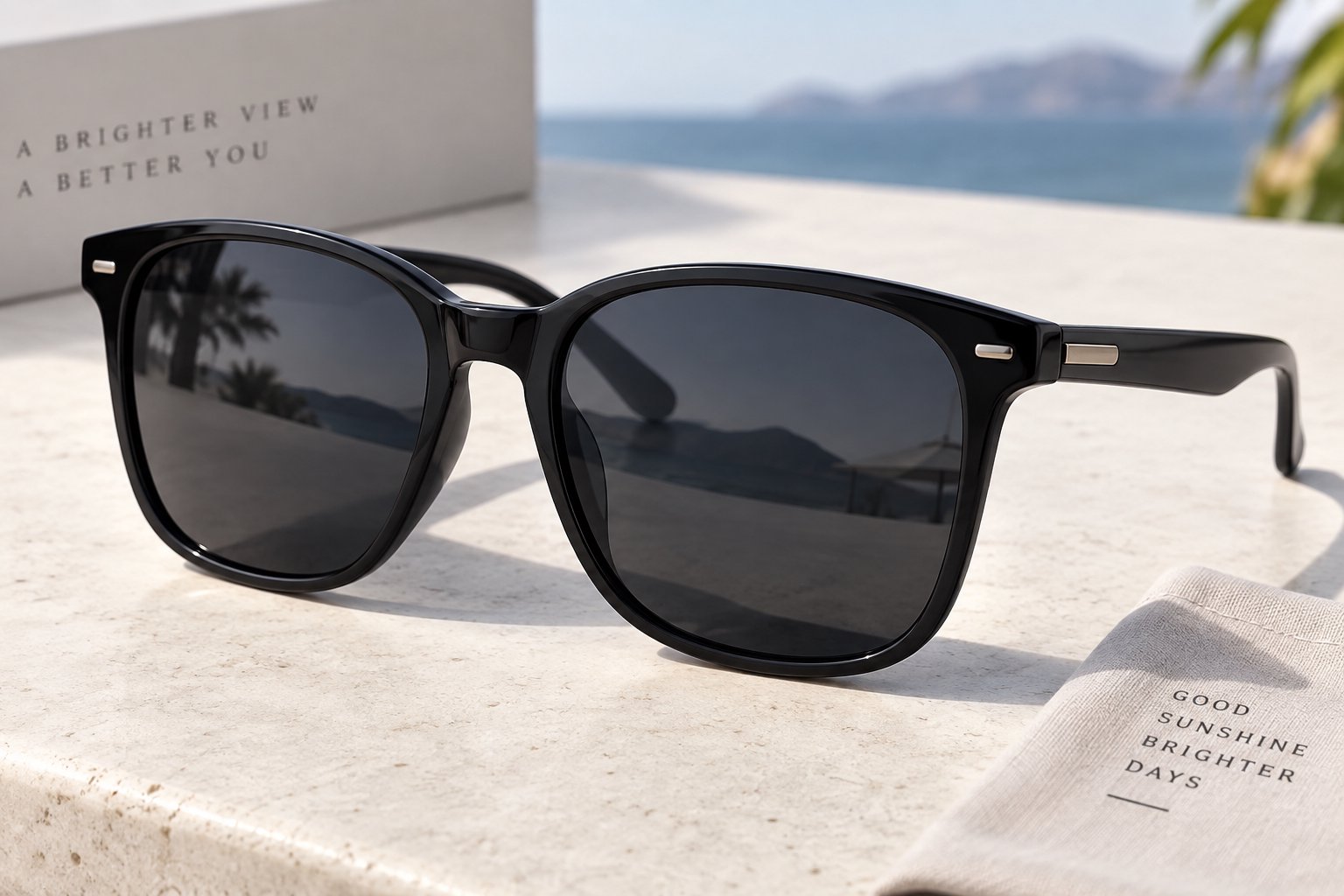
A practical guide to choosing sunglasses, covering lens type, UV protection, polarization, frame shape, and fit.
Sunglasses are more than a style choice. The right pair protects your eyes from glare and UV light while fitting comfortably for the way you actually use them. This guide covers the key factors to weigh when choosing sunglasses, from lens type to frame shape and fit.
Start with lens type and protection
The lens is the most important part of a pair of sunglasses. Two features matter most: UV protection and glare reduction.
UV protection blocks harmful ultraviolet light, which is important for long-term eye health. Most everyday sunglasses should provide full UV protection. Glare reduction is handled by polarization, which cuts reflected light from surfaces such as roads, water, and snow. Polarized lenses are a strong choice for driving and outdoor activities because they make bright reflections more comfortable.
Our range includes both standard and polarized options. For example, the wayfarer sunglasses use polarized lenses for driving and outdoor comfort, while other styles in the range use dark gradient lenses for everyday wear.
Match the frame to your face shape
Frame shape changes how a pair of sunglasses looks and how well they balance on your face. A simple rule is to choose a frame that contrasts with your face shape rather than repeating it.
- Round faces often suit angular frames such as wayfarer or aviator styles.
- Square faces often suit rounder or softer frames.
- Oval faces suit most frame shapes.
Beyond shape, check that the frame width matches your face so the lenses sit centered and the temples do not press. A comfortable fit keeps the sunglasses secure through long wear.
Choose a style for how you use them
Different activities call for different styles. Aviator sunglasses with a brushed metal frame suit a bold, everyday look. Cat-eye sunglasses with tortoiseshell frames add a refined, feminine touch. Round sunglasses with slim gold frames give a soft, bright look. Kids' sunglasses use flexible, impact-resistant frames so they hold up to active play.
Think about where you will wear them most, whether that is driving, the beach, or everyday city wear, and pick a style that fits both the activity and your wardrobe.
What to check before you order
- Confirm the lens provides UV protection.
- Decide whether you need polarized lenses for glare reduction.
- Check the frame material and weight for comfort.
- Verify the frame width and temple length against your usual size.
Frequently asked questions
Are polarized sunglasses worth it?
Polarized lenses are worth it if you spend time driving or in bright, reflective conditions. They reduce glare and improve visual comfort. For mostly indoor or overcast use, standard lenses may be enough.
How do I know if sunglasses fit well?
A good fit keeps the lenses centered in front of your eyes, sits evenly on your nose, and does not pinch the temples. The sunglasses should stay in place when you move your head.
Can children wear the same sunglasses as adults?
Children need frames sized for their faces. Our kids' sunglasses use flexible, impact-resistant frames with UV-protective lenses designed for active play.
If you are sourcing sunglasses for retail or distribution, contact us to discuss lens options, frame styles, and order quantities.