
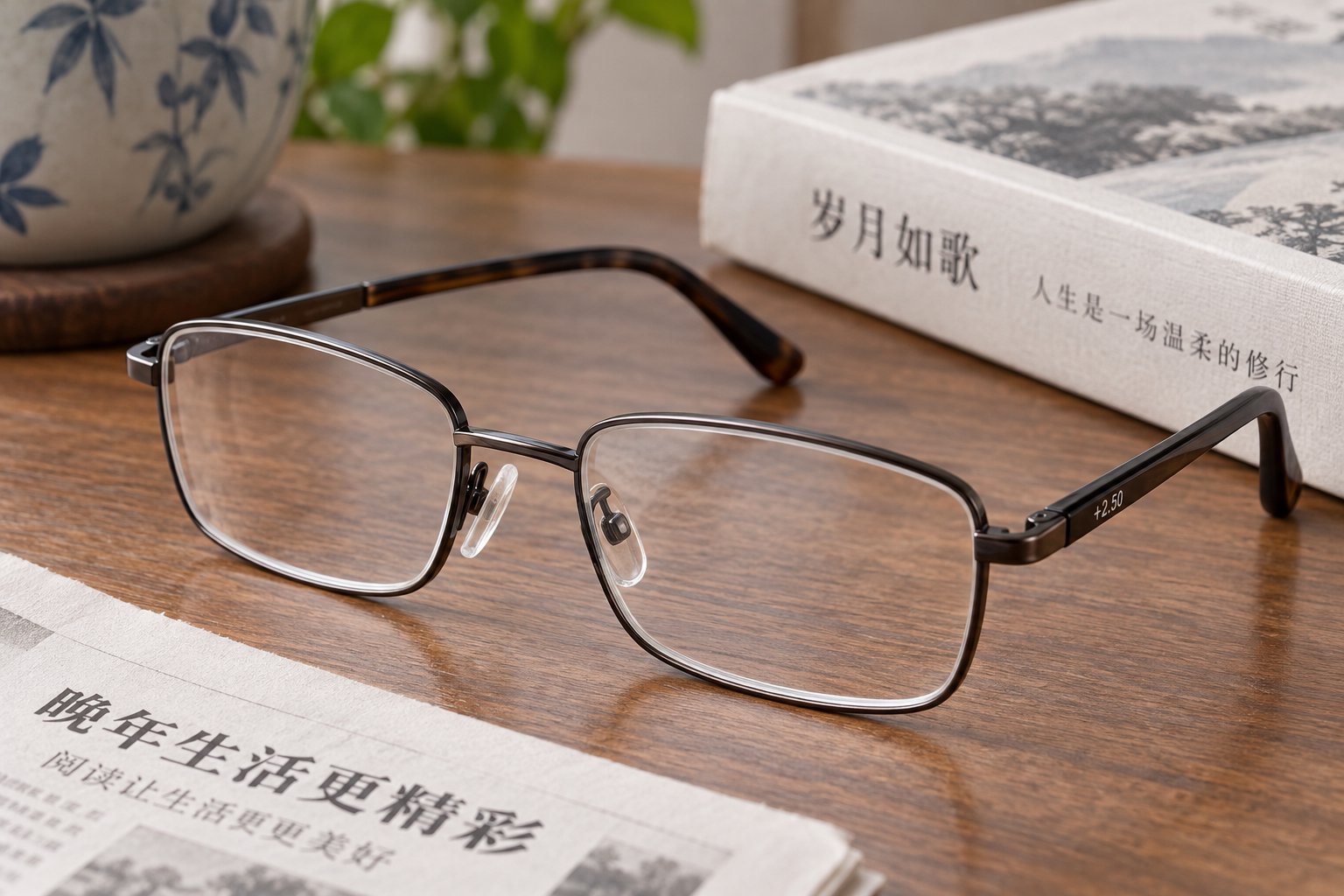
A practical guide to choosing the right reading glasses strength, covering magnification, frame fit, and what to check before you buy.
Reading glasses are a simple, affordable way to make close-up work comfortable again. The most common question buyers ask is which magnification, or strength, to choose. This guide walks through how reading glasses strength works, how to pick the right power, and what to check before you order.
How reading glasses strength works
Reading glasses strength is measured in diopters, usually shown as a plus number such as +1.00, +1.50, +2.00, or +2.50. A higher number means stronger magnification for closer work. The strength you need depends on how close you hold reading material and how much your eyes have changed with age.
As a general starting point, many people begin to need help around age 40 and gradually move to higher powers over time. The table below shows a common starting range, but your own comfort is the final guide.
| Approximate age | Common starting strength |
|---|---|
| 40-44 | +1.00 to +1.25 |
| 45-49 | +1.50 to +1.75 |
| 50-54 | +2.00 to +2.25 |
| 55+ | +2.50 and up |
These are only starting points. The right strength is the lowest one that lets you read comfortably without straining, and it can differ between your left and right eye.
How to test the strength you need
If you already wear reading glasses, the simplest check is to compare your current pair with the next higher and next lower power. Hold a book or phone at your normal reading distance and see which strength feels clearest and most relaxed.
If you are choosing for the first time, start with a lower power and move up only if text still looks blurry at a comfortable distance. Choosing too strong a power can cause headaches and eye strain, so it is better to start lower.
Frame fit matters as much as strength
Strength is only half the decision. A frame that fits well keeps the lenses at the right distance from your eyes and stays comfortable through long reading sessions. Look for a frame that sits evenly on your nose, does not pinch, and keeps the lens centered in front of your eyes.
Our reading glasses range includes slim black metal frames and brown acetate frames, both designed for a clean, comfortable everyday fit. If you are buying for a specific face shape or a particular use, check the frame width and temple length against your usual size.
What to check before you order
- Confirm the magnification power is printed clearly on the product.
- Check the frame material and weight for all-day comfort.
- Verify the lens type matches your use, such as clear lenses for reading.
- Ask about quantity pricing if you are ordering for a store or a team.
Frequently asked questions
Can I use the same strength in both eyes?
Many people do, but your eyes can differ. If you notice one eye is clearly weaker, it is worth checking with an eye care professional before choosing a fixed strength.
Are reading glasses the same as prescription glasses?
No. Reading glasses are ready-made with a fixed magnification, while prescription glasses are made to your exact prescription. Ready-made readers are a convenient option when your needs are simple and consistent.
How long do reading glasses last?
With reasonable care, a well-made frame and lenses last for years. The strength you need may change over time, so it is normal to move to a different power as your eyes change.
If you are sourcing reading glasses for retail or distribution, contact us to discuss available strengths, frame styles, and order quantities.